The Coffee yearbook 2014/15
The Coffee yearbook 2014/15
UgandaCoffeeFederation
UgandaCoffeeFederation
54
55
which feedson theflowers.These
pestswerepreviouslynot an issue.
According toCatherine, in thedry
season, the trees shadeoffmostof the
leaves.When the rainscome, insteadof
the treesbeingable to startflowering,
they startgrowingmore leaveswhich
consumesmorenutrients thatwould
have supportedfloweringand fruition.
Qn:Howareyoumanaging the
BlackCoffeeTwigBorer (BCTB) in
yourcompany?
Answer:
We teach the farmersboth the
traditional andchemicalmethodsof
dealingwith theBCTBand the farmers
choosesaccording towhathecan
afford.
John ismore inclinedon thechemical
usageandgavean insightonhow they
have learnt tomakeamorepotent
cocktail ofpesticides for aneffective
pest control. For example, in their
company, theyencourage farmers to
spray thecoffee treeswithpesticides
like“Striker”mixedwith“Tuffga”a
systemicpesticideusuallyusedon
vegetables soas todestroy the insect
andeggswithin thebranches.This is
done ina rationof 50mls:5mls in20
litersofwater.
Catherineon theotherhand
advocated for the traditionalmethod
considering thecostof thechemicals
visavis theaffordability.
Qn:Canyouelaborateon the
traditionalmethodsyouareusing?
Answer:
Theborerbites intoand lays
eggswithin thebranch. An infected
branch isobservedby the fact that
someof itspartsaredryandothers
aregreen.Thisbranch is cutoff from
thenodal pointwhere it joins the tree,
thesearecollected inapolythene
bagand takenat adistanceaway
from thecoffee treeswhere theyare
burnt.Thisapproach ismoreefficient
than sprayingbecause it killsboth the
borer and itseggs.Using themodern
method isquiteexpensiveandusually
killsonly the insect andnot theeggs. It
isevident that theeggs can still hatch
even if theTwigBorer isdead.
Alternatively, farmersget“munyera”(a
different typeof small blackant) eggs
and take them toan infectedpartof
the farm.Theyhavebeenobserved
tocontrol andeveneradicateBCTB
completely.Theseeggsaremostly
found inmulchedareas.
Furthermore, thereareotherdiseases
that affect thecoffee trees for example
there is fungus thatdevelopsat
the stemof the tree.This fungus
penetrates the rootsanddestroy the
root coatmaking the treeunable
toget thenutrients thathelp the
plant togrow. Asa result coffee tree
Plant spacing
- the shadegiving trees
shouldhavea spacingof 40-40 feet.
This controls them from formingvery
thick shades thatdeny thecoffee light
and rain.Thedanger that results from
the thick shade is that thecoffeebeans
tend tobe lighter inweight as they
grow therefore reduce the farmers
incomeat the timeofmarketing.
Qn:Whatchallengesdo the farmers
facedue to theclimatechanges?
Answer
:During the rainy season, the
coffee treesareattackedbypestsmost
especially theBlackCoffeeTwigBoarer
(BCTB).Most farmersbelieve it isa
resultof the treeshavinga lotofwater
thatmakes them soft andvulnerable
to thepest. Johnadds that inhisarea
(company) thereotherpests thathave
beennoticed in the rainy season for
example;“muwempe”anaggressive
blackbitingant.Thecoffee treesare
alsoattackedbypests like“munyera
omumyufu”, a typeof redbelliedants
T
his isanextract from the
interviewour staffheldat the
CoffeeDaywith twocoffee
farmersdoublingas trainersof coffee
farmers in their farmingcommunity.
Qn:Tell the readersbrieflyabout
yourselves?
Answer:
I amNakibuuleCatherinea
facilitatorwithSemi CoffeeCompany.
I’mMr. Kironde JohnMayanjaa
facilitator atKimikaMulti-Purpose
TradingCompany.Weareboth
farmer facilitators inNakasekeDistrict
whichcomprisesof eight companies.
Companiesare farmergroups
formed invariousplaces inNakaseke.
Catherinenotes that company
facilitators train farmers inaspectsof
planting, harvestingandmarketing
of coffeeand Johnadds that theyare
demo-farmerswhooffer expert advice
to fellow farmers.
Qn:Howhasclimatechange
affected thecoffee farmers inyour
area?
Answer:
Climatechangehas changed
the farmers’plansandprogramsmost
especially theplantingandharvesting
patterns. Cropping seasonshave
becomeunpredictable. Anexample
is thatbefore theclimatechange,
itused tobe sunny in Januaryand
Decemberbutnow it sometimes
rainsheavily.Thecoffee treesarenow
floweringalmost throughout theyear
but their survival and realizationof
thecoffeebeans thereof isdependent
on the supportingclimaticconditions
thereafteror environmental conditions
or agronomicpracticesadopted.
Without this support theflowerswill
abort resulting intoanother frustration
to farmers.
Ithasalsoencouraged farmers towork
smarter rather thanharder inorder
toease theeffectsof climatechange
includingpreparation for the rainsand
devising solutionsofdealingwith the
unpredictableclimaticconditions.
There several organizations that
havecome in togiveexpert advice
to farmersonhow tocarryout
sustainable farming indifferent
climatic seasons.Theyhave taughtus
variousappropriate farmingpractices
to suit thevarious seasonal changes.
Thesepractices include;
Trenching
- apracticeofdigging
trenches in thegardenbefore it starts
raining soas to trapwater andalso
controls the rapidflowofwaterwhich
minimises soil andplant erosion.This
water can laterbe suckedby the roots
ofplants.
Waterharvesting
throughdigging
ofditches that act aswater reservoirs.
Nakaseke lies in thecattlecorridor
whichmeansprolongedand severe
dry spells.This isaggravatedby
seasonal unpredictability.Weusually
advise the farmers tocollect and store
waterduring the rainsandalsocollect
usedbeveragebottlesandnot the
ones for chemicals.Theseareused
towater their coffeeplantsusing the
MITIGATINGCLIMATECHANGE
PREDICAMENTTHROUGHASSOCIATIONS:
An InterviewwithNakasekeCoffee Farmers
water theyhadharvestedduring the
rainy season.This isdonebyputting
thewater into thebottleandplace it
righton thegroundon the tree facing
downand ithelps thewater to leak
slowly to the rootsof theplant.When
waterflows so rapidly, itdoesn’t reach
the rootsof theplant.
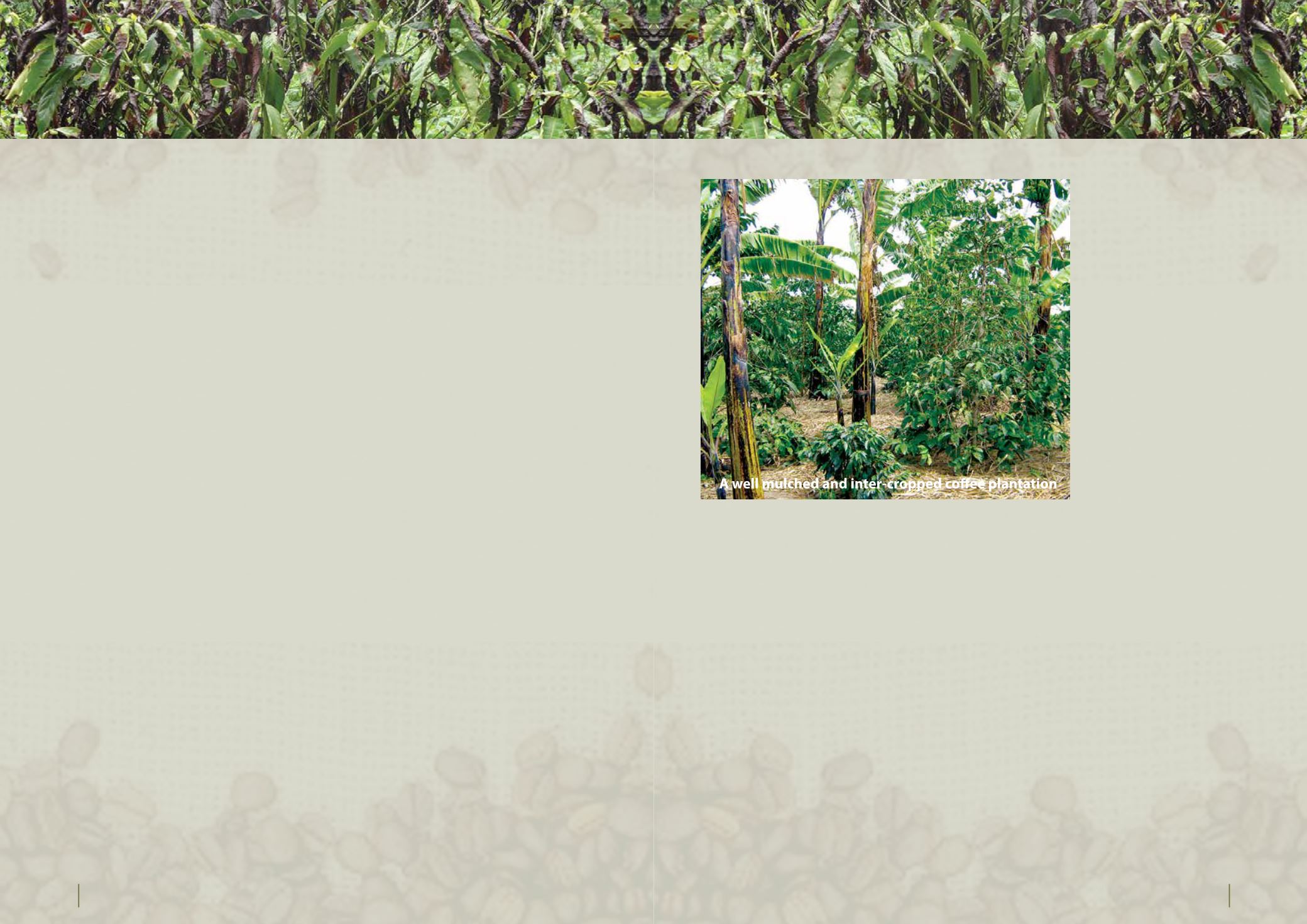
Mulching
-usinggrass,maize stems
tocover thegroundhelps tocontrol
weedgrowthandalsokeep the soils
moist.Mulchesalsoact asmanure
when theyare fedonbyantsand
decompose.
Intercropping
-planting trees that
provide shade to thecoffeeplants.
Usually, trees thathave leaves that
rot easilyareadvisedonacoffee farm
for exampleMutuba,Mugavuamong
others.However, trees like Jack fruit,
AvocadoandMango treesarenot
recommended for intercropping
because their leaves take long to rot
anddecomposeand if they rot, they
leavebehindacrustwhich limits the
penetrationofwater through the soil.
Shademanagement
through
pruning - this isdonebycuttingoffof
somebranches fromboth the shade
providersaswell as thecoffee trees. If
the shadeprovidersarenotpruned,
theyare likely to formavery thick
shade that limits the rainand the
optimum sun light required for their
healthygrowthof coffee.


