T H E C O F F E E Y E A R B O O K
2 0 1 5 / 2 0 1 6
58
UgandaCoffee Federation
2 0 M I L L I O N B A G S B Y 2 0 2 0
International Economic
Outlook
China has had significant
impact oncommodity prices,
thenavailability of cheap
money inEurope and the fall
of oil prices, this coupled
with volatility in currencies of
emergingmarkets have had
direct impact on theprices of
coffee.
Besidesmarket demand and
supply, currencies of the
emergingmarkets greatly
impact coffeeprices. A case
tonote is towards the end of
2015 up to the endof the first
quarter of 2016when theUS
Dollar strengthened causing a
free fall in thewesternmarkets
Brazil thebiggest producer
of coffee for agriculture also
suffered in this economic
crisiswhich led to sluggish
development of the economy
in terms of valuationof the
coffee thus impactingmarket
andconsumption. Demand
in terms of buyingmore
coffeeby theproducerswas
hamperedbecause they had
no volumes to stimulate the
highdemand.
In thepast few years,
production has been as
follows;
There is a steady growth
of 2.1%per annum in
consumption statistics and
thedominant assumption is
that by 2030demandhit 200
millionbagswhilewedon’t
see significant growth in
production.
Brazil focused on sparing
more land for agriculture
and it produces 2.4metric
tons per acre for Arabica
coffee and3.6metric tons
per acreof Robustaand yet
on averageAfricaproduces
10bags per acre. They have
reached amaximumof the
density of shrubs per acre
andhavepumpedall their
efficiencies in to their farms
and thus they can’t pushno
more.
This implies that the
increasingdemand in
volumeswill be expected
to come fromVietnam
andAfrica. Particularly for
Uganda, wherewe still
havepotential to increase
productionper hectare. It is
true that wehave a challenge
of pests anddiseases but this
should not be our excuse to
tap this output because the
same challenges are facedby
other producing countries like
SouthColumbia especially the
leaf rust disease.
Important to note is that world
bigproducers likeBrazil,
Vietnam, India, etcare at the
same timehavinggrowing
domesticdemand for coffee.
Thegovernment vision of 20
millionbags by 2020.
This is the first time inmy 30
years in the coffee sector
to seegovernment literally
pushingprivate sector to
move faster. My observations
in as far as achieving this
visionwill revolveabout;
1. Defining the strategy
invery clear terms.
Bigquestions: arewe
choosing theo
ption of
openingup new lands
for growingcoffeeor
IsUgandachoosing
ondensity per hectare.
Tome, the latter is the
THECOFFEEYEAR
2015/16
IN
THEEYESOFANEXPORTER
Message to the youth: Agriculture
is abusiness. And coffee alone
canemploy you. I am talking about
practical Agriculture.
...there is a steady growth of 2.1%per
annum in consumption statistics...
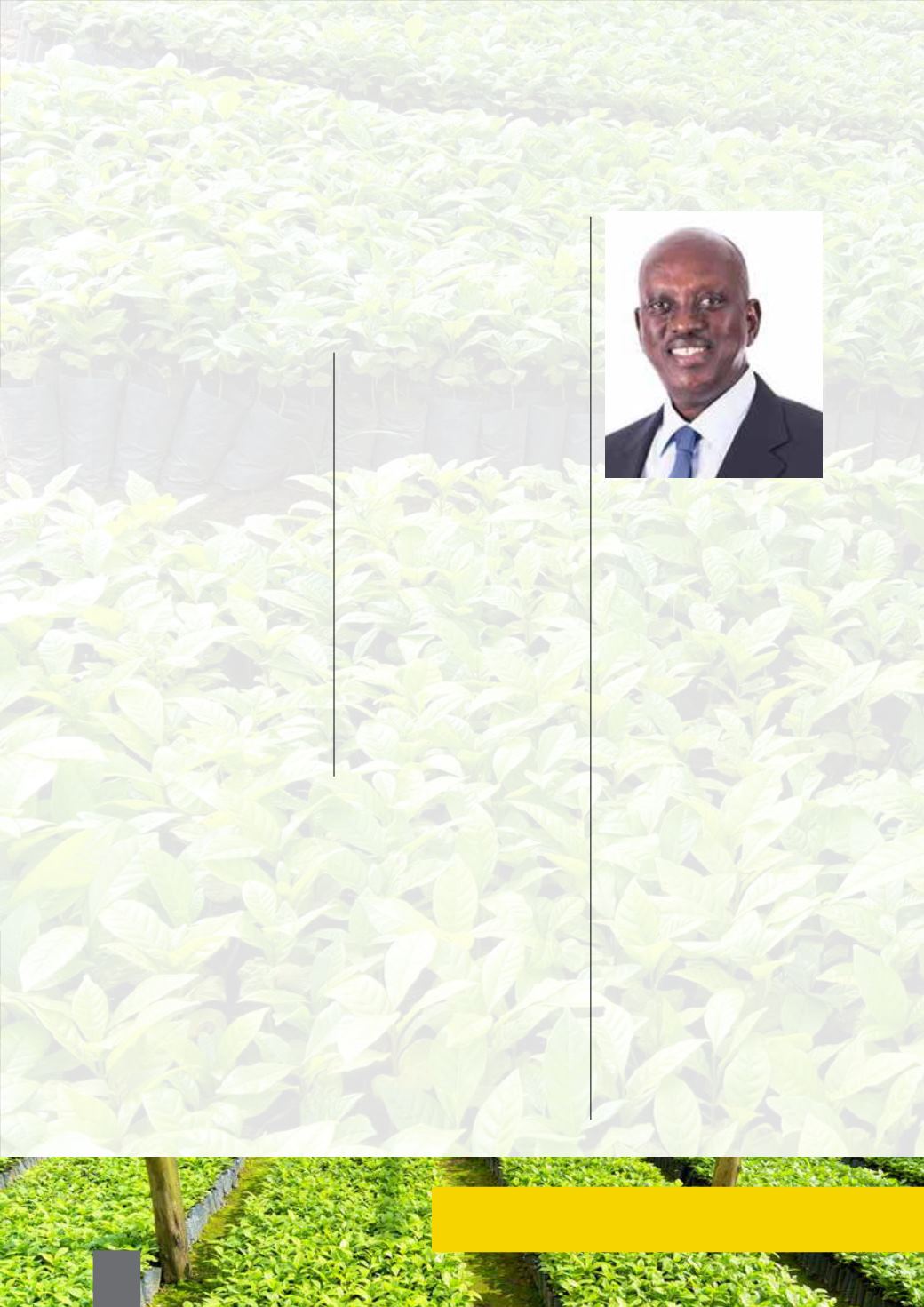
Mr. KaruhangaHannington
MD - SavannahCommodities


