The Coffee yearbook 2014/15
The Coffee yearbook 2014/15
UgandaCoffeeFederation
UgandaCoffeeFederation
8
9
retention of itsmembers. This is going to be amajor task
going forward.
I therefore wish the Board and the Secretariat led by the
Executive Director, Betty Namwagala success in this
endeavour.
TheYear’sTheme
The coffee year 2014/15 theme was coined as Focus on
Productivity: The Coffee Sector at the Climate Change
Frontline. This culminated into the1st International Coffee
Day and Exhibition hosted by GLAD Farm in Kapeeka –
Nakaseke.
Many thanks go to the hosts GLAD Farm and the lead
sponsors innoparticular order aBi Trust, LDCommodities,
UCDA, UGACOF, Kyagalanyi Coffee, Ibero, Besmark,
SavannahCommodities, andETG.
UCDA provided statistics of export for coffee year
2014/15at3.5million60kgbagsvaluedatUS$409million
with a tree population estimated at 330million. This
is remarkable and congratulations to all stakeholders
though Imustadd that this isnot thebestsinceour target
is20Millionbags.
Wehave topush forward. It is now a known statistic that
worldpopulation ison the increase fromaround7billion
people in 2012 t0 9 billion by 2050. For Africa South of
the Sahara population is expected to grow from 850
million people today to around 1.7 billion in 2050, with
Ugandaestimated tobe50millionpeopleby2020.Most
of these people are expected to live in urban areas and
to have higher incomes than now. This is an enormous
opportunity for the coffee industry therefore the need
to increase production and productivity to meet this
demand for thepotential coffeeconsumers.
All of us should embrace the replanting program
(especially – Operation Wealth Creation), support the
commercialization of coffee growing and promote new
initiatives especially in value addition within the coffee
industry inorder tocrystallize theopportunity.
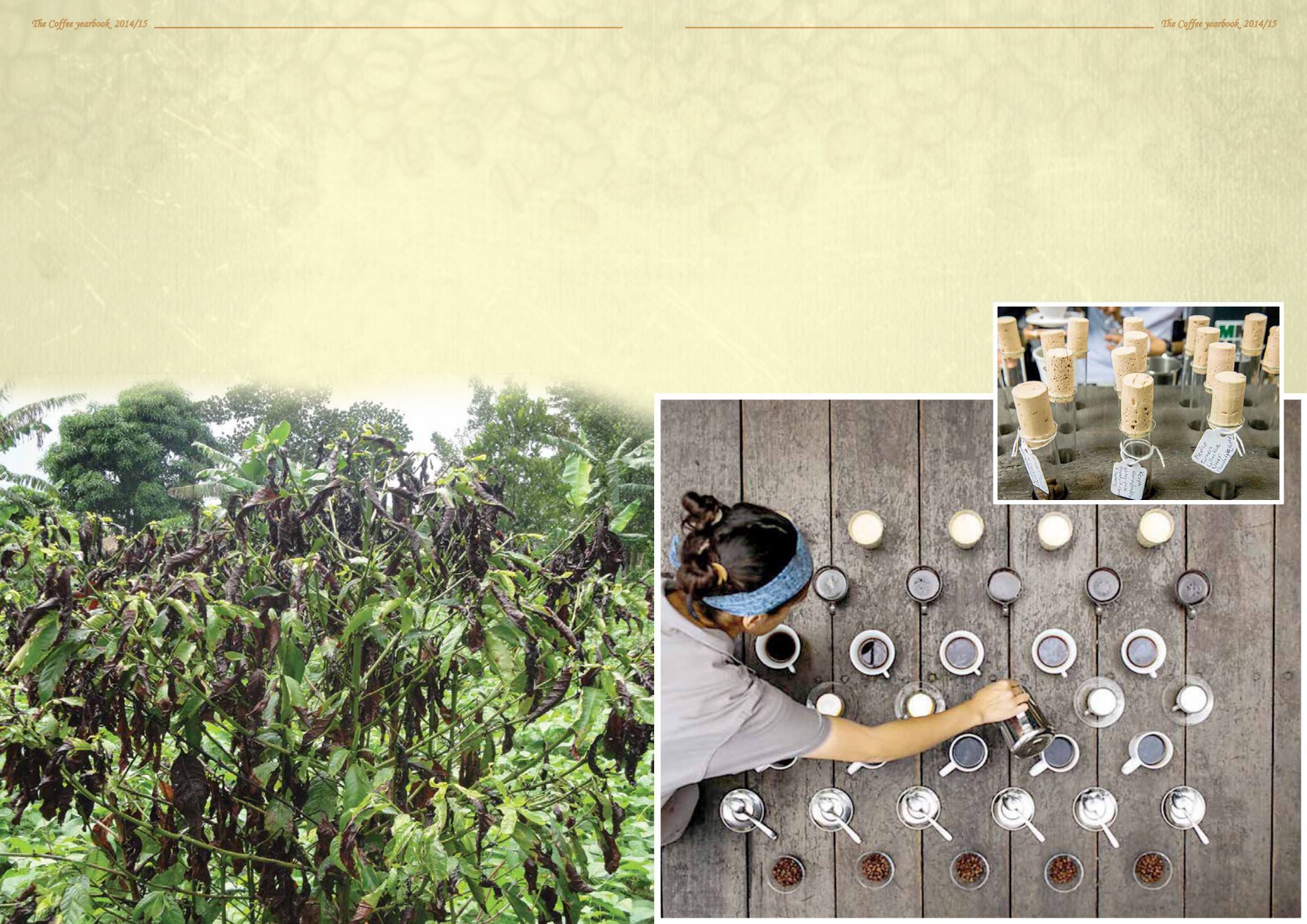
However, note shouldbe takenon the effects of climate
change i.e. higher temperatures, more frequent and
extreme weather, shifting seasons that will negate
the efforts put in especially increased production and
productivity. We need tomitigate the effects of climate
change throughgoodagriculturalpractices i.e.mulching,
growing shed trees, digging trenches to control soil
erosion, harvesting rainwater for irrigation and applying
fertilizers.
Coffee research gave us a ray of hope noting that if the
aboveGAPsareputinplaceproductionofcoffeeespecially
Robustas in Uganda given the global positioning along
theequator,maymarginallybeaffectedby theeffects of
climaticchangeover theyears tocome.
Conclusion
It appears nowmore than ever that emphasis should be
placedat theproduction level toguarantee thesustenance
of theUgandacoffee industry.
It is of great value to also promote dialogue between the
various Private Sector Organizations (PSO) that operate
within the coffee industry in order to share a common
platform, support each other and learn from others’
experiences. I pledge my commitment, that of the UCF
Board and the Secretariat to keep on working with all
stakeholders in realizing our mission of a creating a
favourableproductionand tradingenvironment.


