The Coffee yearbook 2014/15
The Coffee yearbook 2014/15
UgandaCoffeeFederation
UgandaCoffeeFederation
12
13
Word fromMDUCDA
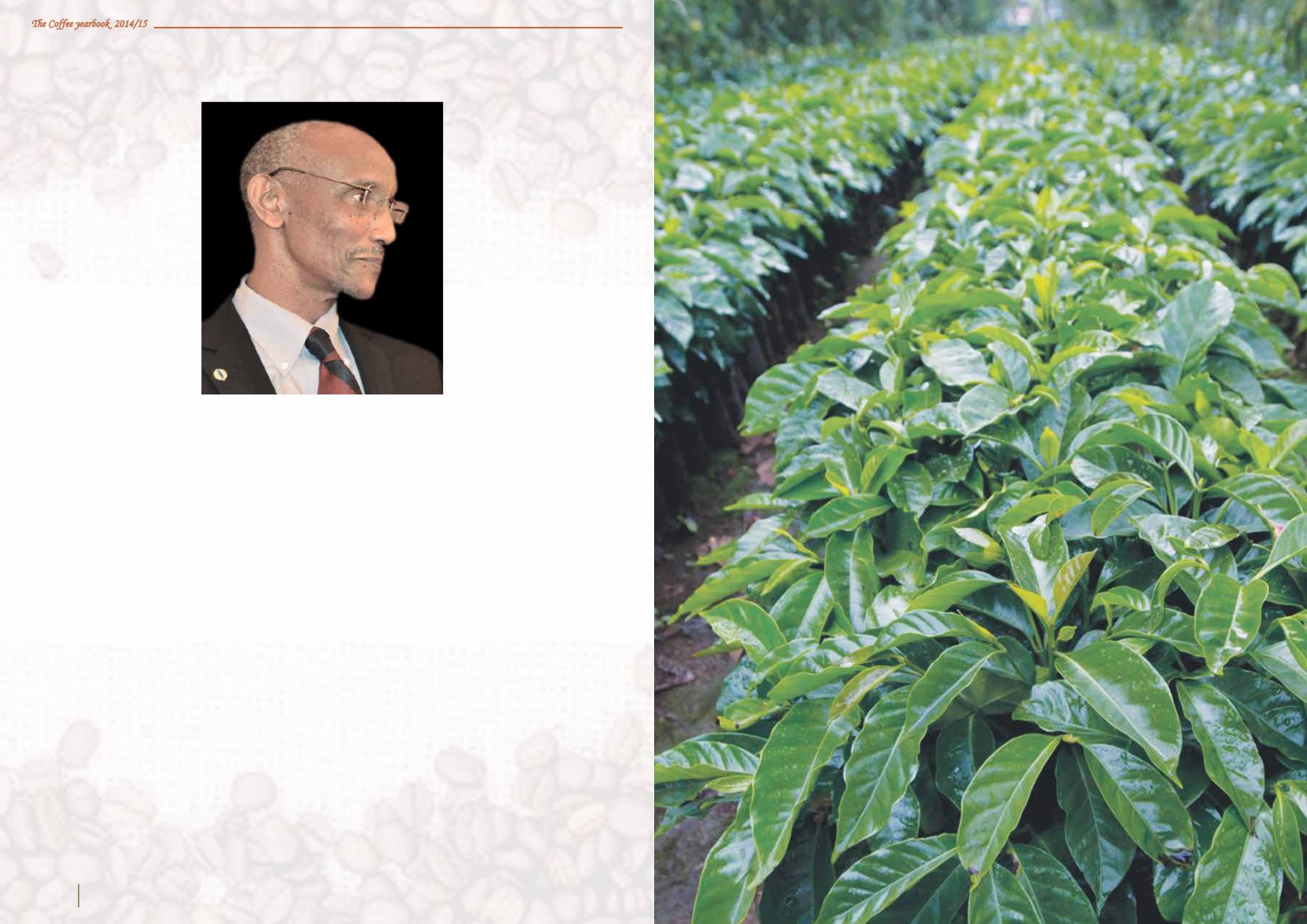
NGABIRANOHENRY
I
wishtocongratulateall thesectorparticipants forhaving
concluded thecoffeeyearending30thSeptember2015.
In theCoffee year 2014/15 about 4.1million60-kgbags
wereproducedoutofwhich3.5million60-kgbagsvalued
at US$ 409millionwere exported. This was considerable
performance given that some major disease and pest
outbreaksanddryspellswereexperienced inmanycoffee-
growing regions.
During the year, the industry generated 108.6 million
coffee seedlings, out of which 85.9 million seedlings,
whichwas ready for plantingworthUGX 32.6 billionwas
planted. This planting benefitted 414,660 households
across the coffeegrowingDistricts. Apart from replanting
programmes, the industry implemented a number of
activities largely focusingonproductionandproductivity,
quality improvement and Value addition. The coffee
industryshould inadditiontobeingresilienttothevagaries
of theweather andmarket volatility, be congratulated for
successfully hosting two origin tours from Europe and
USA. It is no mean achievement that Uganda coffee as
UgandaSIPI FALLSbrandoccupiedshelf space in themost
celebrated specialtymarket in theworld.
To supplement the good effort from the industry players
in coffeedevelopment, Government of Uganda increased
the financial support it has been directly providing to
industry through UCDA from UGX 7.9 billion to UGX
27.9 billion. Considerable contribution was also made by
Development Partners through various programmes under
ABiTrust andFeed theFuture.
Global coffee consumption trends have consistently
registered growth of around 2.4% per annum. According to
the International Coffee Organization, 149 million bags of
coffee were consumed in 2014 and the global consumption
is expected to increase to 200millionbags by 2030. Thiswill
requireanadditional 45-50millionbags.
From the Policy and Strategic point of view, 2014/15 was
particularly interesting because Government approved
the National Coffee Strategy (NCS), which was developed
through stakeholder contribution. The NCS spells out many
strategic actions required by all stakeholders to scale up the
achievements so far made, address emerging issues and
challenges especially adapting to climate change. This will
require developing and increasing the capacity institutions
likeUCF that are at the forefront of placingUganda coffee in
the internationalmarket.
I wish to call upon all stakeholders to come forward andplay
their roles in implementingtheNCS. Iwishyouallaproductive
andvibrant 2015/16.


