T H E C O F F E E Y E A R B O O K
2 0 1 5 / 2 0 1 6
10
UgandaCoffee Federation
2 0 M I L L I O N B A G S B Y 2 0 2 0
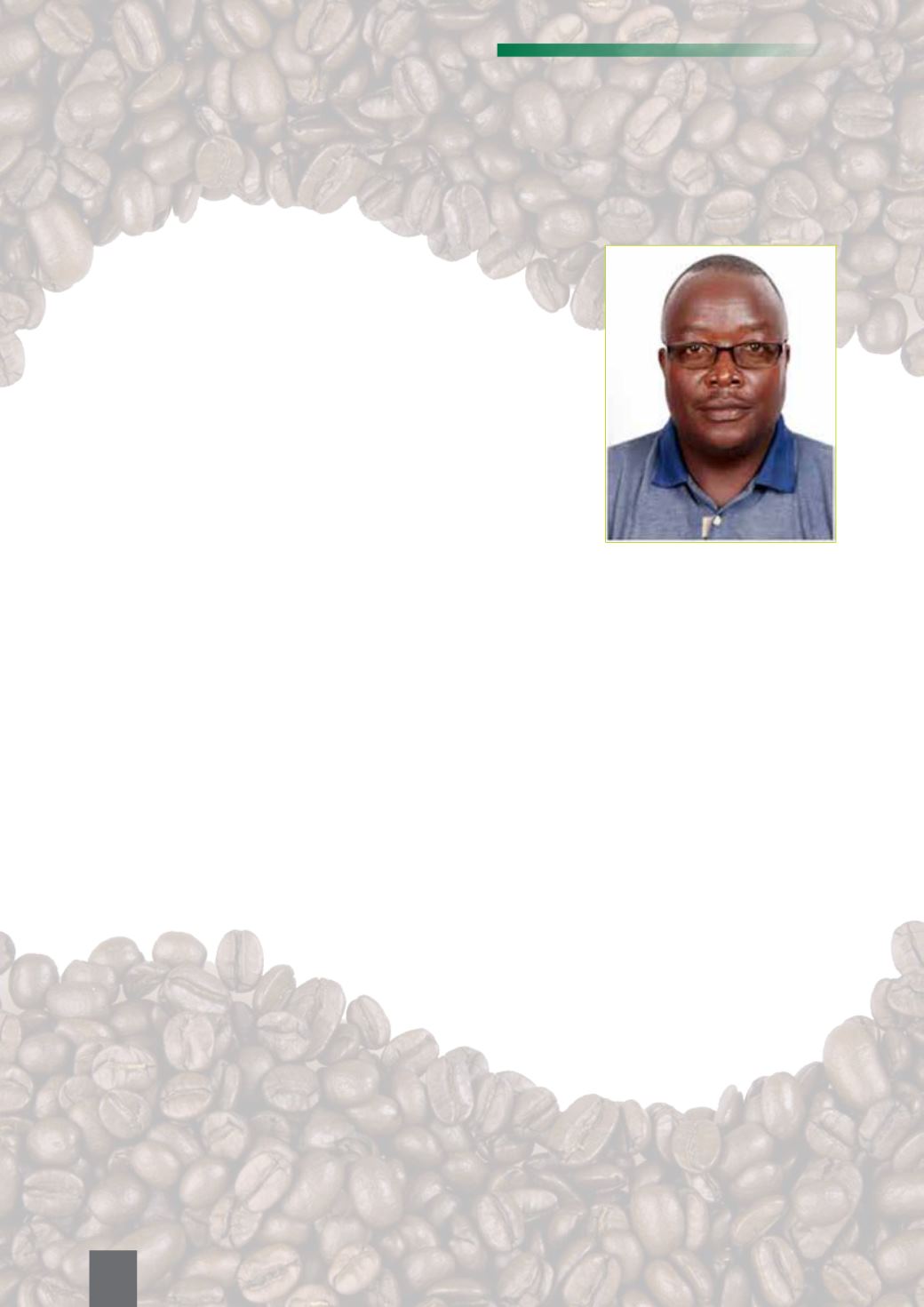
Word from thePresident-UCF
MUKASALUZINDAFRED
Toall coffee
lovers and
members, I greet
youall andwish
youaprosperous
2016-17 coffee
year.
E
arly this year, the
Government of Sudan
slapped uswith
stringent export coffee
standards that left many
exporters indilemma.
Sudan is the single export
destination for Ugandacoffee.
Majority of the exporters
especially the local ones have
found this destination very
friendly in terms of proximity,
payment terms and the
presence of the agents at the
source. This greatly affected
theexport volumes toSudan
from24.24% of the volume in
December 2015 to as low as
0.89% inMarch 2016.
Theprivate sector engaged
theGovernment of Uganda
which later negotiatedwith
theSudanGovernment and
agraceperiod of 2 years
weregranted until June
2018before thenecessary
measures are set up to carry
out thenecessary tests.
This year has seenprolonged
dry spells inmost of the
coffeegrowing areas. The
areas of Masaka andWestern
Uganda, currently thebiggest
producers of coffee, were
hardest hit. This impacted the
coffee at flowering stage (i.e.
abortion of flowers); at the
fillingof theberries stage (i.e.,
poor filling); andhas therefore
negatively impactedcoffee
yield ingeneral.
The higher percentage of
UgandaCoffee is produced
by the smallholder farmers.
Without the vagaries of
climate, smallholder farmers
are already vulnerable
due toa lack of working
capital, declining soil fertility,
and increasingpests and
diseases amongothers.
Climate changeonly adds to
thepressure a smallholder
farmer already feels.
We appreciate the
government’s effort to
support farmerswith the
cleanplantingmaterials that
couldenable theGovernment
achieve its visionof 20
millionbags by 2020but this
support is not enough. In the
2016 report on assessment
of the survival rateof the
coffee seedlings planted
inSeptember - November
2015andMarch -May 2016
seasonswhereNorthern
Uganda registered the
highest survival rate at 59%,
followedbyCentral Uganda
at 45%; theEastern and
WesternUgandawereat
42%and theareawith the
least survival ratewas South
WesternUganda at 38%.
Thegoodperformance in
theNorthernUgandawas
attributed to the fact that
the coffee enterprise is
relatively new in the region
and therefore therewasmuch
enthusiasmexhibitedwith
thegood togoodagronomic
practices especially
mulching and shades,
organisation of farmers
into farmer groups and the
adequatepreparedness.
Unpredictable rainpatterns
andprolongeddry spells
featured in the challenges
facedby farmers. Going
forward, theGovernment
needs to seriously consider
irrigationbecausemuch as
theweather experts are telling
us that we are receiving the
sameamount of rainfall, its
distribution is tooerratic.
Inaddition to this, coffee
seedlingdistributionneeds to
move from supply driven to


