67
13/14
ACCESSTOCOFFEEPLANTING
MATERIALSBYFARMERS
Typeofmaterialsplantedby farmer
s
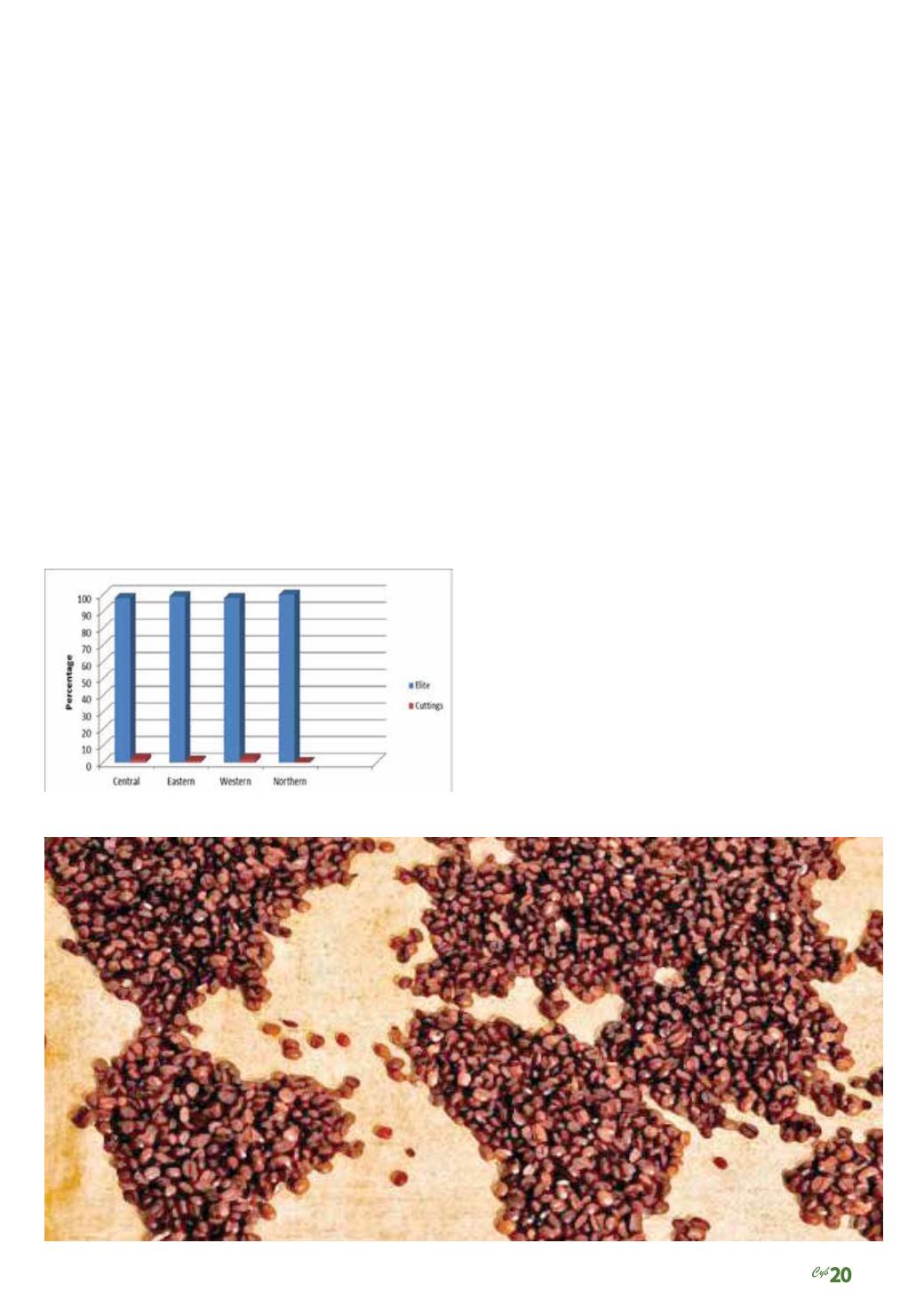
Type of materials planted by the farmers per region is
presented in Figure 6. Elite materials represent the biggest
number over 90% of the total quantity of coffee planting
materials accessed by farmers. Elite planting materials are
much easier tomanage at farm level than the nodal cuttings
and the level of investment is much lower compared to the
cuttings. Mortality rate is also high in nodal cuttings, which
calls foramorecontrolledenvironmentand technical expertise.
Though cuttings represent a small percentage (2%), when
planted theyproduceabetter yieldper tree (5kg) compared to
elitematerials (3kg) in the first three years of establishment. It
wasalsoestablished that of thematerials received for planting
by farmers, 98% was supplied by UCDA, 1% by NAADS,
0.5%was received from coffee buyers/processors and 0.5%
from some NGOs (0.5%) that procure and supply elite coffee
plantingmaterials. A negligible percentage of farmers buy on
their own, particularlynodal cuttingsdespite the fact that such
materials are more expensive. Nursery operators reported
that all cuttings produced were bought which left an unmet
demand for these type of plantingmaterials
Figure 6:Type of plantingmaterials plantedby farmers
Source: Surveydata
Though some farmers procure planting materials, it should
be noted that majority wait for free materials supplied by
UCDA and this has created a heavy dependency syndrome.
However, farmers reported challenges associated with free
plantingmaterials;
·
Seedlings are delivered when they are stressed,
which isusually related to the longdistances from the
nursery to a central collection point;
·
Plants are delivered with broken stems and leading
to low field establishment rates. In addition, deliveries
are made late into the planting/rainy season forcing
farmers to abandon the seedlings under trees with
minimal care.
Costs involved in accessingplantingmaterials
The survey findings show that farmers only incurred transport
cost during the collection of coffee planting materials from
the sub-counties or parish headquarters. It was noted that to
transport 400 seedlings for a distance of 4-10 Km required
farmers topayUGX10,000 translated intoanaverageof UGX
25per plant. During this transport, an average loss of 2.5% is
generally recorded as a result of physical stem damage and
loss of potted soil that leave the roots exposed.
Challenges andproposed solutions in coffee production
Major challenges faced by farmers during production and
marketing of coffee were identified and suggested solutions
arepresented inTable10. The challenges identified included;
climatic changes that have led to unpredictable weather
conditions, limited number of coffee nursery operators at
the sub-county level, decreasing land areas due to increased
pressure on land by rapidly growing population, increased
prevalence of pests anddiseases likeBCTB andCWD.


