58
13/14
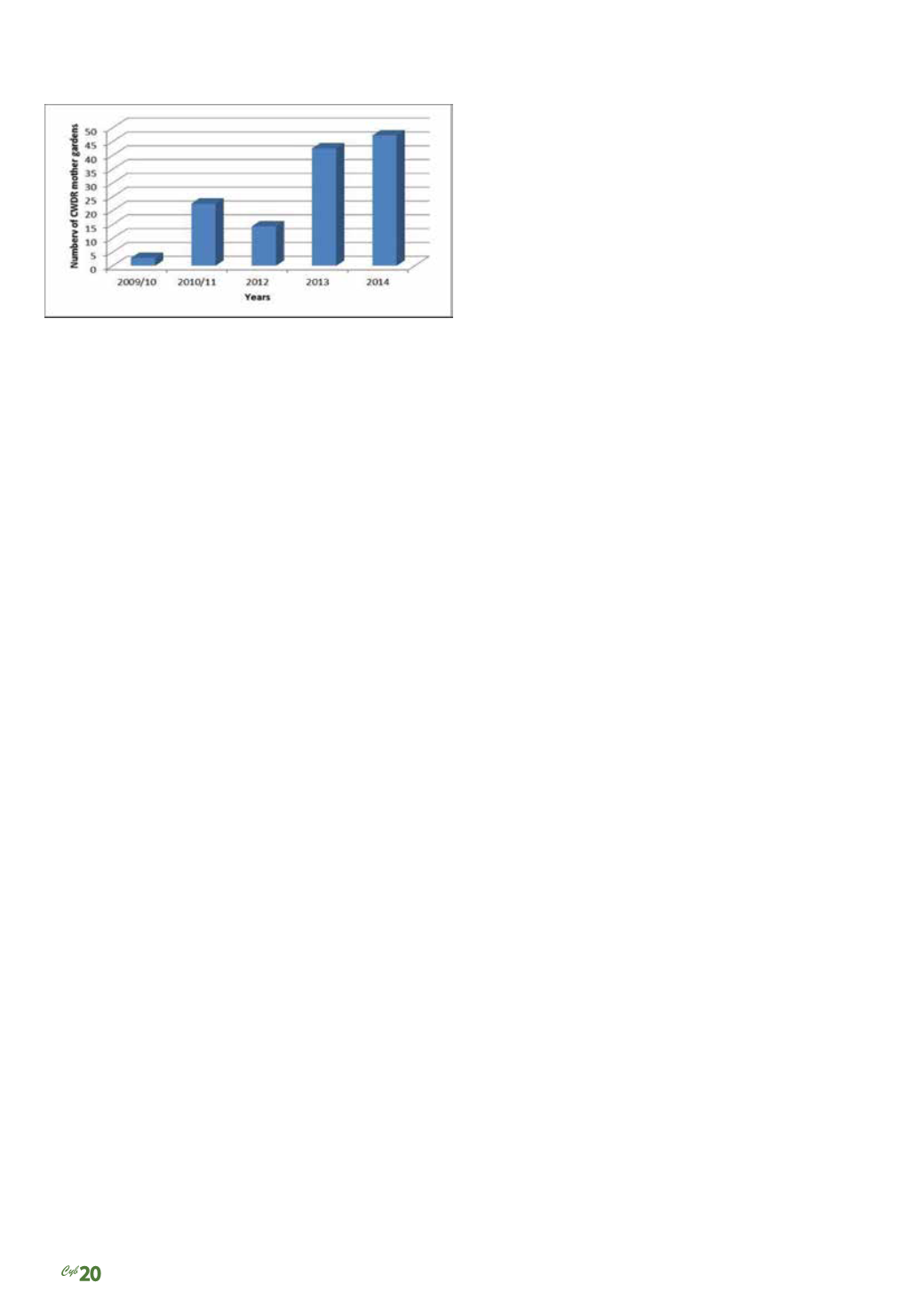
Figure 2: Number of CWD tolerant mother gardens
established
Source:NaCORI 2014
CHALLENGESAND
OPPORTUNITIESFACEDBY
RESEARCH
a) Challenges:
The findings show that NaCORI is faced with numerous
challenges that hinder the institution from fulfilling itsmandate
of providing technology on coffee production, post-harvest
handlingandmarketing. The institutionhas limitedmanpower
to support all its research initiativesand lacksenough financial
resources to maintain and manage the established mother
gardens for CWD tolerant materials and the subsequent
multiplication of the cuttings for onward establishment of
mother gardens by nursery operators. The institute is also
faced with unregulated inflow of coffee planting materials
from the neighbouring countries like Kenya (RUIRU II) and in
country collection of Robustamaterials from forests. There is
need for NaCORI to be facilitated by the private sector and
development partners to supplement on resources from
government.
The infrastructure needs rehabilitation, the shade nets were
blown off by strong wind during April-May 2014 rains, and
there is no tissue culture laboratory at Kituuza to support
quick multiplication and generation of new technologies.
Previously, there was a public private partnership (PPP)
arrangement or contract between NaCORI, UCDA and AGT
Laboratory toproduce tissueculturecoffeeplantingmaterials.
This arrangement involvedUCDA funding themultiplication of
coffeematerials, NaCORI providing leaf materials toAGTL for
multiplication up to in-vitro plant stage before handing over
the plantlets to NaCORI to wean them off as coffee planting
materials ready for fieldplanting.
This arrangement experienced several challenges;
(i)
NaCORI did not have enough capacity in terms of
screen houses at Kawanda for weaning off these
plants.
(ii)
NaCORI had few staff, inexperienced and poorly
supervised (at Kawanda) to attend to the plantlets
and thus leading to highmortality rates.
(iii)
NaCORI together with AGT had not fully developed
bothmultiplicationandweaningoff protocolsof all the
CWD tolerant lines.
(iv)
Therewas noprogressivemonitoring of the life of the
plantingmaterials from start to final product since the
productioncontractwasdividedbetweenAGT (leaf to
in-vitroplantlets) andNaCORI (in-vitroplantlets to final
coffee planting materials) resulting in unharmonized
implementation and supervision.
Despite the above challenges, positive experiences were
recorded;
(i)
The private sector through AGT showed resilience
andmanaged toproduce the first commercial tissue
culture coffee plantingmaterials.
(ii)
The contract gave opportunity to a private sector
tissue culture laboratory to perfect and at the same
time develop weaning protocols for the seven
CWD tolerant lines. The development of weaning
protocols by the private tissue culture laboratory is
an innovation that has improved the quality of tissue
culture plantingmaterials currently produced.
(iii)
The contract stimulated several private investments
in tissue culture laboratories to venture in coffee
propagation in thecountry thusenhancing thespeed
at which Uganda produces more tissue culture
materials tomeet industry demand
Based on the review of the above Public Private Partnership
(PPP) arrangement, theconsultants recommend the following;
(i)
Future contracts to produce coffee tissue culture
materials should be shared by all the private sector
laboratories in order todevelop skills in the industry.
(ii)
For future PPP contracts, private tissue culture
laboratories shouldbe given responsibility tomanage
all theprocesses from leaf initiation to final product to
reduce counter accusations by the partners.
(iii)
Since tissue culture technology is still relatively new in
Uganda,morePPPshouldbeemphasized toenhance
information sharing and training of human resource
through internshipprograms linked to universities.
b) Opportunities
(i)
The researchscientistshave longstandingexperience
working on coffee, this expertise especially in plant
diseases, pests and breeding can be enhancedwith
additional expertise in biotechnology techniques to
aidbreeding andmultiplication of plantmaterials.
(ii)
New investments in biotechnology laboratories in
the country with 7 registered private TC laboratories.
These investments present an opportunity of
leveraging resources and expertise with the NaCORI
to solve earlier problems.
(iii)
The coffee sub-sector is well developed compared
to other value chains in the country, which provides
an opportunity for members of the coffee platform
to deliberate and provide a research agenda that is
aimed at addressing the current and most pressing
problems to the industry stakeholders.
(iv)
While NaCORI is under NARO, UCDA as an
autonomous body under MAAIF can directly support
a research agenda that it deems necessary for the
coffee industry.
Measures required toachieve sustainability
For sustainability the following proposalswere recommended
by the scientists;
(i)
NaCORI should establish a separate Tissue Culture
laboratoryspecifically forcoffeeasopposed tosharing
with Kawanda where other crops like bananas,


