52
13/14
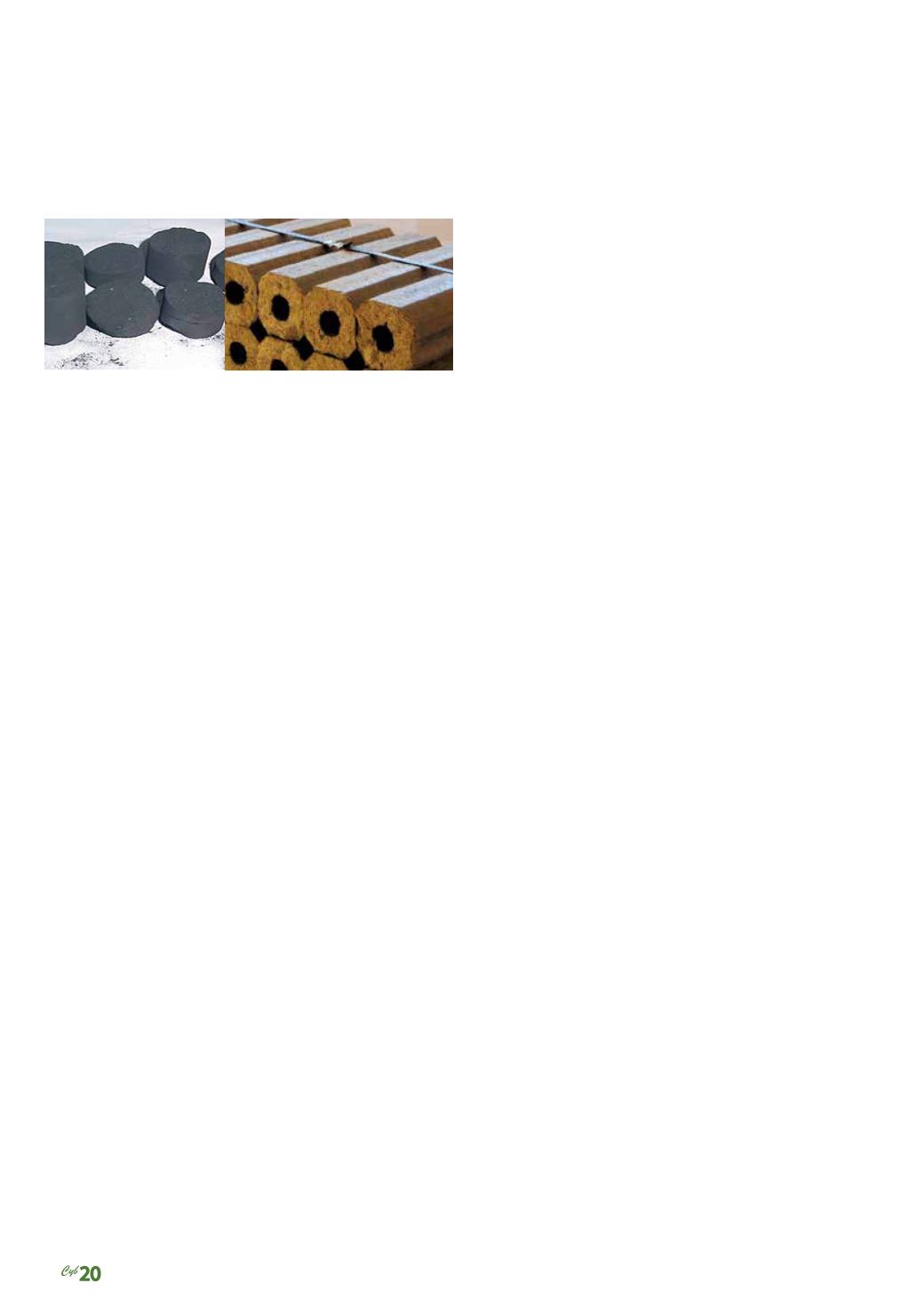
Husks can also be used to make coffee briquettes. These
are a compressed block of organic waste materials used for
cookingand/orheating. Theyareoftenusedasadevelopment
intervention to replace firewood, charcoal, or other solid fuels.
Coffee briquettes can save time, save money, decrease
deforestation, andprovide income generating opportunities.
Coffeebriquettes
These have been used in many coffee producing countries
includingCuba, Guatemala among others and in Uganda are
mainly produced by Kampala Jellitone Suppliers the makers
of NguvuCoffee.
Coffee husks and hulls contain great amount of cellulose and
hemicellulose which make them similar to wood. Therefore
partial replacement of up to50% ispossible for theproduction
of particle board.
Spent CoffeeGrounds
Currently, Nescafe is using the spent coffeegrounds toas fuel
used to produce steam requirements for their factory. This
has enabled them to reduce environment pollution and save
energy costs.
Spirit coffee can be used as an adsorbent for waste water
treatment. Experiment and result analysis carried out by
Vilnius Gediminas Technical University 2014 indicated that
coffee grounds can be excellent natural adsorbent for heavy
metal removal from aqueous solutions, like wastewater of
landfill leachate.
OtherUsesof Spent CoffeeGrounds
·
Pest Repellent:
Sprinkle used coffee grounds
around your plants toprotect themagainst destructivegarden
pests like ants, snails, and slugs.
·
Compost It for Later:
If you don’t have a use for
coffee ground fertilizer right away, go ahead and throw it on
the compost heap. Coffee grounds make excellent “green”
matter as theyare rich innitrogen. Also, beneficialwormsmay
be attracted to your compost with the addition of old coffee.
·
Caffeine for… Carrots?
Before you sow carrot or
radish seeds, mix them with some old dried coffee grounds
togive them an energy boost right from theget-go. You’ll get
bigger and better producewith the added bonus of deterring
pests that want to eat your carrots before you do.
·
Eliminate Odors:
Coffee absorbs scents from its
environment, which makes it a fantastic natural deodorizer.
Let the grounds dry, then pour them into a cup you can sit in
your fridgeor freezer. If you’vebeencookingwithonion, garlic
or other pungent foods, rub your hands in dry coffee grounds
to remove smells.
·
HomemadeCandles:
If you love the smell of coffee,
turn your old grounds into all-natural homemade candles,
·
Coffee for Your Hair:
If you use a lot of hair styling
products, or if you’ve recently switched to a natural shampoo
and conditioner, your hair is probably weighted down by
residue. Remove that build-up using old coffee grounds to
give your hair a lift and restore itsnatural healthy shine. Before
you shampoo, simply grab a handful of used grounds and
massage them into your hair. The coarse texture is enough
tobreak apart theproduct residue, but it’s alsogentle enough
that it won’t damage your locks.
·
Caffeinated Soap:
Did you know that you can
actually absorbcaffeine through your skin? Youcan for anall-
natural alternative, why not turn your old coffee grounds into
homemade soap so you canget onemore good caffeine kick
in themorningbeforework.
Biogas fromcoffeewastewater:
According to UTZ, tailor made water waste management
systems are enabling Central American coffee farmers to
generateenergy fromwasteunder aproject ledbysustainable
farming. The project has proven that is possible to generate
energy, tackle climate change and protect water resources
by treating discharges from coffee mills. Coffee production
generates a great amount of wastewater that is regularly
released untreated into rivers, affecting aquatic fauna and
flora as well as downstream communities. This water also
comes along with tonnes of organic waste and high toxicity,
which affects the soil and generates considerable amounts
of greenhouse-gas emissions, particularly methane, heavily
contributing to climate change. If well treated, this water
can generate significant amount of biogas used to power
households and coffeemills. It can alsoprevent the release of
greenhouse-gas emissions into the atmosphere
Coffeemucilage:
Mucilage is the thin sweet slimy layer covering theparchment,
according to ICOwecanobtain the following typesofmaterials
in varying states of purity:
·
Unrefined pectins:
These pectins can be either
thermo reversible soluble gels or non-reversible cross linked
oneswhich have a differentmouth feel.
·
Natural coffee fruit sugars
,
mainly from the
recycledpulpingwater:
They aremostlymonosaccharides,
glucose, galactose, rhamnose and arabinose, with a different
flavour, reminiscent of plums, and could be marketed as
somethingnew for themoresophisticatedcoffeeconnoisseur.
·
Antioxidants and Flavonoid compounds:
These
are mainly the anthocyanin fruit colour compounds, but they
also contain all the other polyphenolics such as chlorogenic
acids and of course caffeine. These materials can be put
together into several combinations to make a range of food
additives which should be of interest to the ‘health food’
industry.
Other uses include:
The renewed focus and study into potential uses of coffee
waste not only endeavors to mitigate the environmental
issues but to also help coffee producing third-world countries
createaneconomically sustainable industrywith theutilization


